
Awadh: Soil, Memory, People — Anjani Kumar Pandey Preserves the Stories of a Vanishing Rural World
A village is more than a place on a map. It is a living record of family histories, inherited traditions, shared celebrations, local crafts, and the people whose lives give a community its identity. Yet, as migration, economic change, and modern technology reshape rural India, many of these experiences are gradually disappearing from everyday life.
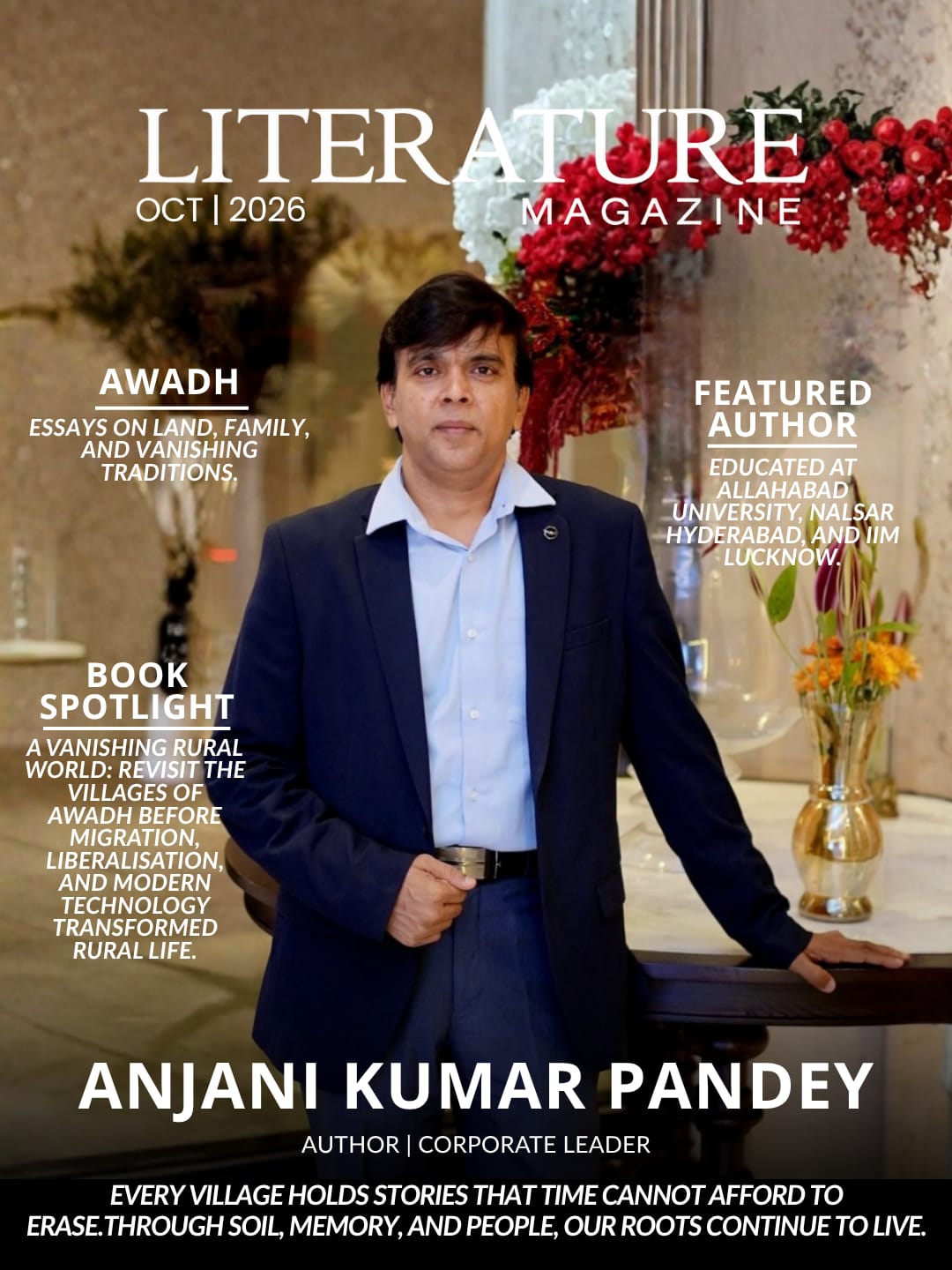
In Awadh: Soil, Memory, People, author Anjani Kumar Pandey revisits the rural world of Awadh in Uttar Pradesh, bringing together personal memories, family history, village traditions, and reflections on social change. Through a literary memoir rooted in his own experiences, Pandey documents a way of life that survives increasingly through recollection, oral storytelling, and the memories of older generations.
Returning to the Roots of Awadh
The book begins in Premdharpatti, the author’s ancestral village in Pratapgarh. Named after the family’s earliest known ancestor, Premdhar Pandey, and his wife, Shakti Devi, remembered as Shakti Mai, the village provides the foundation for a wider exploration of belonging, inheritance, and identity.
From this ancestral setting, Pandey builds a portrait of rural life shaped by land, kinship, community relationships, and the rhythms of everyday existence. His recollections extend across Pratapgarh, Amethi, and Allahabad, connecting individual memories with the broader cultural landscape of Awadh.
The narrative explores how a person’s sense of identity can remain closely connected to the place where their family history began, even when education, professional responsibilities, and urban life take them elsewhere.
For readers who have left their ancestral homes in pursuit of new opportunities, this return to the village offers a familiar emotional question: how much of the place where we grew up continues to shape who we become?
The People Who Give a Village Its Identity
A central strength of Awadh: Soil, Memory, People is its attention to the individuals who make up the social fabric of a village.
Pandey recalls village personalities such as Ramai Yadav, Dhanai, Khelawan the carpenter, and Jigna Bua. These figures bring warmth, humour, and moral complexity to the narrative, transforming the village from a geographical setting into a community of distinctive lives and relationships.
The book also explores the everyday experiences that once structured rural life, including traditional crafts, agricultural labour, village elders, domestic customs, and the role of animals in household routines.
By recording these details, Pandey preserves a portrait of rural existence that extends beyond major historical events. The everyday lives of ordinary people become important parts of a larger cultural memory.
Their stories reveal how traditions are carried forward not only through formal institutions or written records, but also through familiar faces, repeated practices, and relationships built over generations.
Festivals, Folk Songs, and Vanishing Traditions
Cultural traditions often survive through the routines that communities repeat year after year. In Awadh, festivals, folk songs, and seasonal observances have long helped connect people to their surroundings and one another.
In his memoir, Pandey explores celebrations such as Dussehra and Devutthani Ekadashi, along with folk songs associated with work, festivities, and community life. He also recalls the ashram of Tikarmafi Baba near Amethi, the place of his birth.
These recollections offer readers an opportunity to understand the cultural rhythms that shaped the region’s rural communities.
However, the book does not present the past as an entirely idealised world. Its treatment of customs and social hierarchies acknowledges that traditions can carry both cultural significance and difficult realities.
This balanced perspective allows the memoir to preserve what is meaningful without overlooking the complexities of the society it describes.
A Conversation Between Generations
Among the book’s distinctive features are intimate conversations with the author’s mother. These interludes bring another voice into the narrative, allowing family memories to emerge through stories and recollections passed from one generation to the next.
Her perspective demonstrates how family history often survives through oral storytelling. Details that may never appear in official records can remain alive through the memories of parents, grandparents, and other elders.
These conversations also broaden the memoir beyond the author’s individual experience. Memory becomes a shared process, shaped by different generations and their interpretations of the same family and community.
The role of women’s memory is particularly significant in this context. Their recollections can preserve domestic histories, relationships, and everyday experiences that are frequently overlooked in conventional accounts of the past.
Through these intergenerational exchanges, Awadh: Soil, Memory, People explores how stories help maintain a connection between those who remember an earlier world and those who encounter it only through recollection.
Change, Loss, and the Meaning of Belonging
The memoir reflects on the transformation of rural India under the influence of economic liberalisation, migration, and technological change. These developments have altered how people work, communicate, travel, and maintain relationships with their ancestral homes.
For many families, the village remains an important source of identity even when their daily lives unfold elsewhere. Yet, as older generations pass away and traditional practices become less common, the details that once defined a community can gradually disappear.
Pandey’s writing responds to this sense of loss by documenting the people, places, and customs that shaped his early world.
The book’s central concern is not simply nostalgia. It is the importance of recording lived experiences before they fade from collective memory. By acknowledging both the dignity and the limitations of traditional social structures, the memoir invites readers to consider what deserves preservation and how cultural heritage can remain meaningful in a changing society.
About the Author: Anjani Kumar Pandey
Born in Pratapgarh and raised in Prayagraj, formerly known as Allahabad, Anjani Kumar Pandey studied at Allahabad University, NALSAR Hyderabad, and IIM Lucknow.
After clearing the Union Public Service Commission examination in 2010, he joined the Indian Revenue Service and served in the Government of India for over a decade. He subsequently moved into the corporate sector and currently serves as a C-suite executive with a leading corporate organisation.
Alongside his professional career, Pandey has maintained a commitment to reading, writing, and environmental awareness. His work appears across newspapers, magazines, and online platforms.
He is best known for his bestselling book Allahabad Blues. Awadh: Soil, Memory, People marks his fourth book and continues his engagement with place, memory, and the experiences that shape personal and cultural identity.
Editorial Verdict
Awadh: Soil, Memory, People offers a thoughtful literary portrait of rural Awadh through family history, village characters, folk traditions, and conversations across generations.
Anjani Kumar Pandey brings an insider’s perspective to a world transformed by migration, economic change, and modern technology. By recording the experiences of ordinary people alongside the customs and relationships that shaped village life, the memoir explores the relationship between personal memory and collective heritage.
For readers interested in literary memoirs, regional history, Indian cultural traditions, and the stories of ancestral homes, this book offers an opportunity to reconnect with a world that continues to influence countless family histories.
At its heart, Awadh: Soil, Memory, People reminds readers that preserving the past begins with listening to the people who still remember it.
Book: Awadh: Soil, Memory, People
Author: Anjani Kumar Pandey
Read the Book on Amazon:
https://www.amazon.in/dp/9373356089
Author Instagram: @allahabad_blues
Facebook: https://www.facebook.com/Anjani.pandey9