
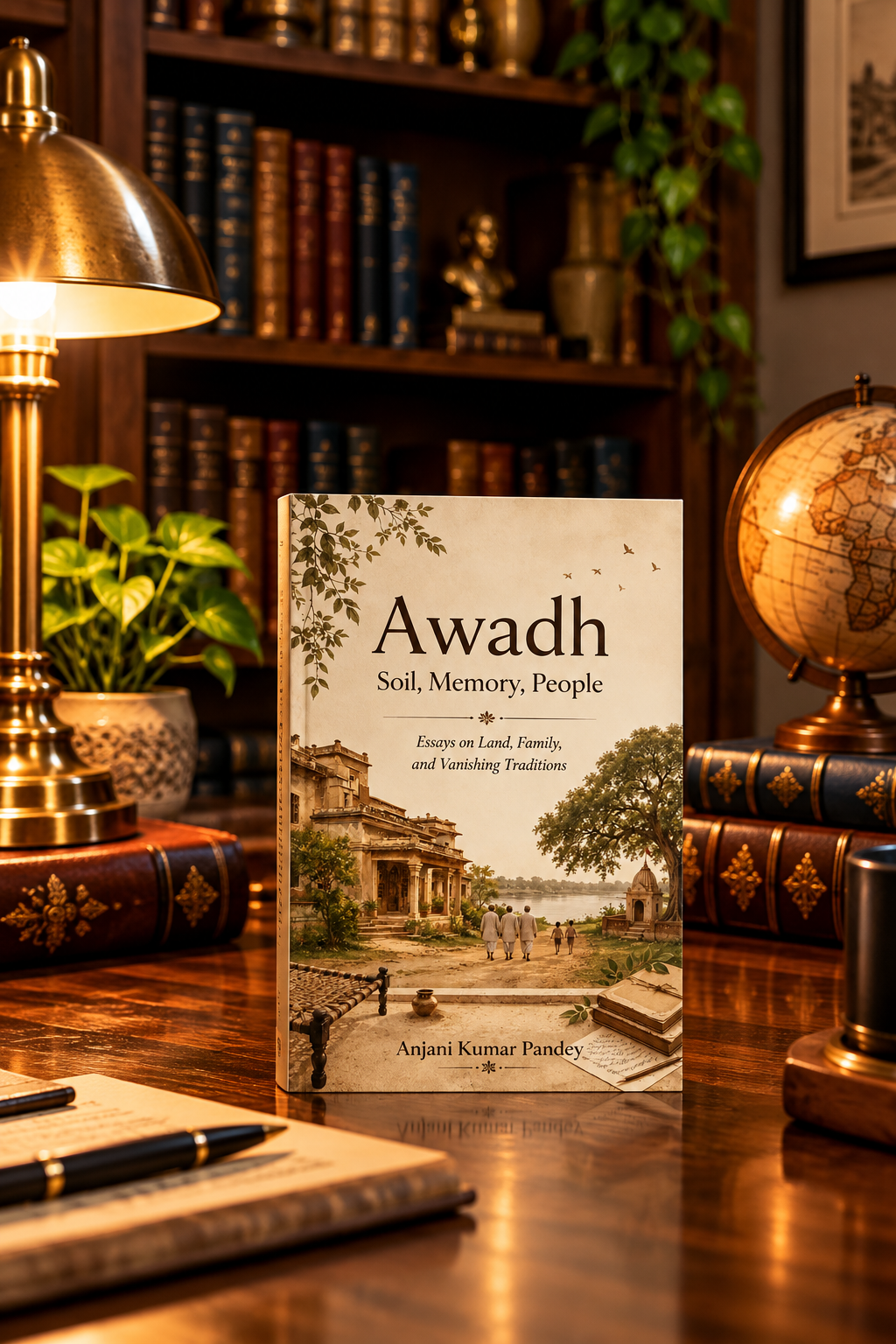
Awadh: Soil, Memory, People: Preserving the Stories of a Vanishing Rural World
Author: Anjani Kumar Pandey
A village is more than a place on a map. It is a living record of family histories, inherited traditions, shared celebrations, local crafts, and the people whose everyday lives give a community its identity. Yet, as migration, economic change, and modern technology reshape rural India, many of these experiences are gradually disappearing from everyday life.
In Awadh: Soil, Memory, People, Anjani Kumar Pandey returns to the rural world of Awadh in Uttar Pradesh, bringing together personal memories, family history, village traditions, and reflections on social change. Through a literary memoir rooted in his own experiences, Pandey documents a way of life that increasingly survives through recollection, oral storytelling, and the memories of older generations.
The book is both a personal journey into the author’s past and a broader reflection on how communities preserve their identities as the world around them changes.
Returning to the Roots of Awadh
The memoir begins in Premdharpatti, the author’s ancestral village in Pratapgarh. Named after the family’s earliest known ancestor, Premdhar Pandey, and his wife, Shakti Devi, remembered as Shakti Mai, the village becomes the foundation for an exploration of belonging, inheritance, and identity.
From this ancestral setting, Pandey builds a portrait of rural life shaped by land, kinship, community relationships, and the rhythms of everyday existence. His recollections extend across Pratapgarh, Amethi, and Allahabad, connecting individual memories with the wider cultural landscape of Awadh.
The narrative highlights how a person’s sense of identity can remain closely connected to the place where their family history began, even when education, professional responsibilities, and urban life take them elsewhere.
For readers who have left their ancestral homes in pursuit of new opportunities, this return to the village raises a familiar question: how much of the place where we grew up continues to shape who we become?
By revisiting his roots, Pandey offers readers an opportunity to reflect on their own relationships with family, home, and the communities that helped shape their lives.
The People Who Give a Village Its Identity
One of the defining features of Awadh: Soil, Memory, People is its attention to the individuals who form the social fabric of a village.
Pandey recalls village personalities such as Ramai Yadav, Dhanai, Khelawan the carpenter, and Jigna Bua. These figures bring warmth, humour, and human complexity to the narrative, transforming the village from a geographical setting into a community of distinctive lives and relationships.
The book also explores the everyday experiences that once structured rural life, including traditional crafts, agricultural labour, village elders, domestic customs, and the role of animals in household routines.
Such details may appear ordinary when viewed individually, but together they create a valuable portrait of a community. They reveal how cultural identity is built not only through major historical events, but also through repeated practices, familiar conversations, and relationships maintained across generations.
By documenting these people and experiences, Pandey preserves a record of rural life that might otherwise remain confined to the memories of those who witnessed it.
Festivals, Folk Songs, and Vanishing Traditions
Cultural traditions often survive through the activities communities repeat year after year. In Awadh, festivals, folk songs, seasonal observances, and local customs have long connected people to their surroundings and to one another.
Pandey explores celebrations such as Dussehra and Devutthani Ekadashi, alongside folk songs associated with work, festivities, and community life. He also recalls the ashram of Tikarmafi Baba near Amethi, the place of his birth.
These recollections help readers understand the cultural rhythms that shaped rural communities. Festivals were not simply occasions for celebration; they also created opportunities for families and neighbours to gather, share experiences, and maintain a collective sense of belonging.
The memoir does not present the past as an entirely idealised world. Its reflections on customs and social hierarchies acknowledge that traditions can carry both cultural significance and difficult realities.
This balance allows the book to celebrate what deserves remembrance without overlooking the complexities of the society it describes. It encourages readers to distinguish between preserving cultural heritage and unquestioningly accepting every practice inherited from earlier generations.
A Conversation Between Generations
Among the book’s distinctive elements are intimate conversations with the author’s mother. These interludes bring another voice into the narrative, allowing family memories to emerge through stories and recollections passed from one generation to the next.
Family history often survives through oral storytelling. Details that may never appear in official documents can remain alive through the memories of parents, grandparents, and other elders. Their recollections preserve not only information about the past but also the emotions, relationships, and values associated with it.
The inclusion of the author’s mother’s perspective broadens the memoir beyond an individual account. Memory becomes a shared process, shaped by different generations and their interpretations of the same family and community.
Women’s memories are particularly important in this context. Their recollections can preserve domestic histories, relationships, everyday routines, and social experiences that are frequently overlooked in conventional historical narratives.
Through these intergenerational exchanges, Awadh: Soil, Memory, People explores how storytelling creates a connection between those who remember an earlier world and those who encounter it through the accounts of others.
Change, Migration, and the Meaning of Belonging
Rural India has experienced significant changes through economic liberalisation, migration, technological development, and evolving social expectations. These changes have influenced how people work, communicate, travel, and maintain relationships with their ancestral homes.
For many families, the village remains an important source of identity even when their daily lives unfold in cities or other parts of the country. However, as older generations pass away and traditional practices become less common, the details that once defined a community can gradually disappear.
Pandey’s memoir responds to this sense of loss by documenting the people, places, and customs that shaped his early world.
The book’s concern extends beyond nostalgia. It asks readers to consider the importance of recording lived experiences before they fade from collective memory. The stories of village residents, the rhythms of agricultural life, and the traditions surrounding festivals can all contribute to a richer understanding of India’s social and cultural history.
By acknowledging both the dignity and the limitations of traditional social structures, the memoir encourages readers to consider what deserves preservation and how cultural heritage can remain meaningful in a changing society.
Why Awadh: Soil, Memory, People Matters
The significance of the memoir lies in its focus on ordinary lives. Cultural history is not preserved only through monuments, official records, or celebrated personalities. It also survives through family stories, local customs, everyday occupations, and memories shared within communities.
By recording these experiences, Pandey creates a connection between personal recollection and collective heritage. His narrative encourages readers to recognise the value of local histories and to pay attention to the stories of people whose experiences might otherwise go undocumented.
The book may resonate particularly with readers who have moved away from their ancestral villages, those interested in the cultural landscape of Uttar Pradesh, and anyone curious about how rural communities have changed over time.
It also offers a reminder that remembering the past does not require rejecting the present. Instead, understanding earlier ways of life can help individuals make more informed choices about which traditions, values, and relationships they wish to carry forward.
About the Author: Anjani Kumar Pandey
Born in Pratapgarh and raised in Prayagraj, formerly known as Allahabad, Anjani Kumar Pandey studied at Allahabad University, NALSAR Hyderabad, and IIM Lucknow.
After clearing the Union Public Service Commission examination in 2010, he joined the Indian Revenue Service and served in the Government of India for over a decade. He subsequently moved into the corporate sector and currently serves as a C-suite executive with a leading corporate organisation.
Alongside his professional career, Pandey has maintained an interest in reading, writing, and environmental awareness. His work has appeared in newspapers, magazines, and online platforms.
He is best known for his bestselling book Allahabad Blues. Awadh: Soil, Memory, People marks his fourth book and continues his exploration of place, memory, and the experiences that shape personal and cultural identity.
Final Verdict
Awadh: Soil, Memory, People by Anjani Kumar Pandey offers a thoughtful literary portrait of rural Awadh through family history, village personalities, folk traditions, and conversations across generations.
By documenting the experiences of ordinary people alongside the customs and relationships that shaped village life, Pandey explores the relationship between personal memory and collective heritage. His reflections on migration, modernisation, and social change add depth to the memoir, highlighting the importance of preserving cultural experiences without idealising the past.
For readers interested in literary memoirs, regional history, Indian cultural traditions, and the stories of ancestral homes, the book offers an opportunity to reconnect with a world that continues to influence countless family histories.
Ultimately, Awadh: Soil, Memory, People reminds readers that a community’s identity is carried not only by its land and buildings, but also by the people who remember its stories and pass them on.
Editorial Verdict: A reflective literary memoir celebrating the people, traditions, and memories that form the cultural heart of rural Awadh.
Recommended for: Readers interested in Indian literature, cultural heritage, regional history, rural life, and family memoirs.
Read the Book
Buy Awadh: Soil, Memory, People on Amazon
Author on Facebook: Anjani Kumar Pandey
Instagram: @allahabad_blues