
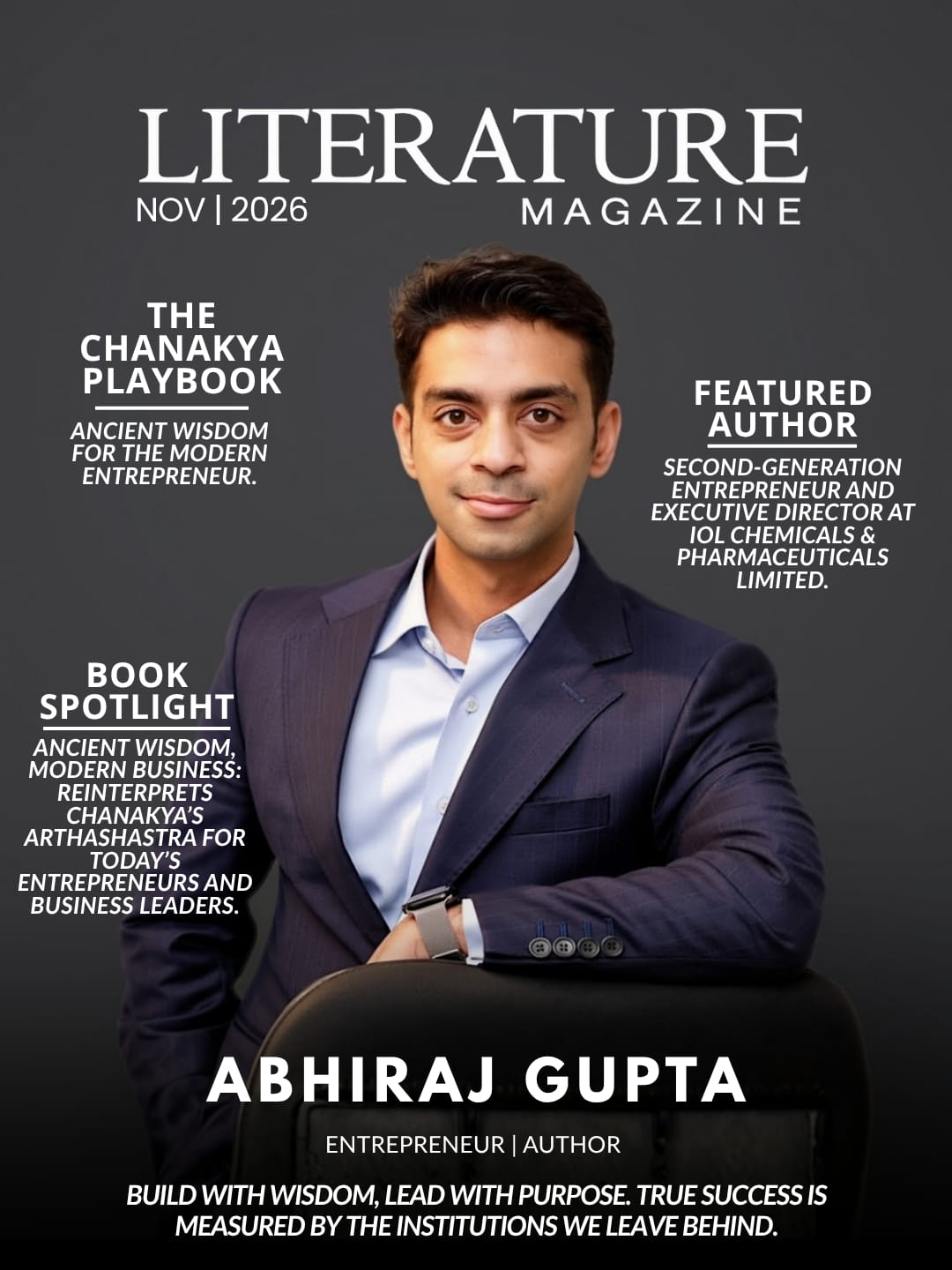
The Chanakya Playbook: Abhiraj Gupta Connects Ancient Indian Wisdom with Modern Business Leadership
What can an ancient Indian treatise on statecraft teach today’s entrepreneurs about building successful organisations, navigating competition, and making decisions in uncertain markets?
In The Chanakya Playbook: Ancient Wisdom for the Modern Entrepreneur, Abhiraj Gupta explores this question by bringing the principles of Chanakya’s Arthashastra into the contemporary business environment. Published by Rupa Publications, the book examines how classical Indian thought can offer practical perspectives on strategy, leadership, governance, and long-term institution-building.
Rather than relying on quick-fix management advice, Gupta presents a framework that connects personal discipline, strategic foresight, ethical responsibility, and organisational strength.
Ancient Wisdom for Contemporary Business Challenges
Modern entrepreneurs operate in an environment shaped by competition, changing markets, technological developments, and unpredictable economic conditions. While business strategies continue to evolve, the fundamental challenges of leadership remain familiar: making difficult decisions, managing resources, building capable teams, and preparing organisations for the future.
Chanakya’s Arthashastra offers a historical perspective on many of these questions. Its ideas concerning governance, strategy, administration, and the management of resources provide a foundation for examining leadership beyond immediate commercial outcomes.
In The Chanakya Playbook, Gupta revisits these principles and connects them with the realities of contemporary business. The objective is to make classical Indian knowledge relevant to founders, executives, and emerging leaders who must balance growth with resilience and responsibility.
The book encourages readers to look beyond short-term achievements and consider the structures, decisions, and values that allow organisations to endure.
Saptanga: Understanding the Strength of an Organisation
One of the important frameworks explored in the book is Saptanga, traditionally understood as the seven elements of a state.
Gupta connects this classical framework with organisational thinking, encouraging readers to consider the different elements that contribute to institutional strength.
The broader lesson is that a successful organisation cannot depend on one individual, one strategy, or one source of strength. Its long-term performance depends on how effectively its various components work together.
For entrepreneurs and business leaders, this perspective offers an opportunity to examine organisational foundations, leadership responsibilities, resources, and the relationships that support sustainable growth.
It also highlights the importance of building institutions capable of functioning effectively beyond the influence of any single leader.
Shadgunya: Strategic Thinking in a Competitive World
Another significant concept explored in the book is Shadgunya, which refers to six approaches to strategy in classical Indian political thought.
By connecting this framework with modern business challenges, Gupta explores the importance of understanding circumstances before choosing a course of action.
Business leadership frequently requires decisions about competition, collaboration, negotiation, expansion, and risk. A strategy that works in one situation may not be appropriate in another.
The principles associated with Shadgunya encourage leaders to consider the wider environment, evaluate available choices, and respond thoughtfully rather than relying on instinct alone.
This emphasis on strategic judgement is particularly relevant in markets where uncertainty and changing competitive conditions demand flexibility.
Balancing Dharma and Artha
A central proposition of The Chanakya Playbook is that business success requires both effective strategy and principled leadership.
The book connects dharma, representing ethical responsibility and righteous conduct, with artha, representing material prosperity and economic objectives.
This relationship raises an important question for modern organisations: how can businesses pursue growth while remaining accountable to their responsibilities?
Financial performance and institutional values do not have to exist in opposition. Ethical decision-making, responsible governance, and long-term thinking can contribute to stronger organisations and more sustainable outcomes.
By exploring this balance, Gupta encourages entrepreneurs to consider not only what their businesses achieve but also how those achievements are pursued.
Leadership Beyond Short-Term Success
Leadership involves more than setting targets and delivering immediate results. It requires the ability to make difficult decisions, develop people, build resilient teams, and prepare an organisation for challenges that may not yet be visible.
The book places importance on personal discipline, sound counsel, and strategic foresight as essential qualities of effective leadership.
It also invites readers to examine their decision-making processes and consider whether their actions strengthen the organisation over time.
For founders, executives, and aspiring leaders, these ideas offer a broader perspective on success—one that includes institutional continuity, responsible governance, and the ability to adapt without losing sight of core principles.
About the Author: Abhiraj Gupta
Abhiraj Gupta is a second-generation entrepreneur and Executive Director at IOL Chemicals & Pharmaceuticals Limited, a leading Indian manufacturer of active pharmaceutical ingredients and specialty chemicals.
Educated at the University of Warwick and the Indian School of Business, Gupta brings professional experience in strategy, leadership, governance, and institution-building.
His work in complex manufacturing businesses has shaped his interest in how organisations balance growth with resilience, disciplined decision-making, and ethical responsibility.
With The Chanakya Playbook: Ancient Wisdom for the Modern Entrepreneur, Gupta makes his debut as an author, connecting India’s intellectual heritage with contemporary business realities.
Through this work, he encourages entrepreneurs and executives to think beyond short-term success and focus on building institutions that last.
Editorial Verdict
The Chanakya Playbook: Ancient Wisdom for the Modern Entrepreneur offers a compelling connection between classical Indian strategic thought and the challenges of contemporary business leadership.
Through concepts such as Saptanga, Shadgunya, dharma, and artha, Abhiraj Gupta explores organisational strength, strategic decision-making, ethical responsibility, and sustainable growth.
The book may appeal to entrepreneurs, business owners, corporate executives, management professionals, and emerging leaders interested in combining practical business thinking with India’s intellectual heritage.
Its central message is straightforward: lasting success is not built through strategy alone. It also requires discipline, sound judgement, ethical leadership, and the ability to build institutions that endure.
BOOK: The Chanakya Playbook: Ancient Wisdom for the Modern Entrepreneur
AUTHOR: Abhiraj Gupta
PUBLISHER: Rupa Publications
READ THE BOOK ON AMAZON:
https://www.amazon.in/dp/9376466624
BOOK INSTAGRAM:
https://www.instagram.com/thechanakyaplaybook/
AUTHOR LINKEDIN:
https://in.linkedin.com/in/abhiraj-gupta-638967a8
BOOK LINKTREE:
https://linktr.ee/Thechanakyaplaybook