

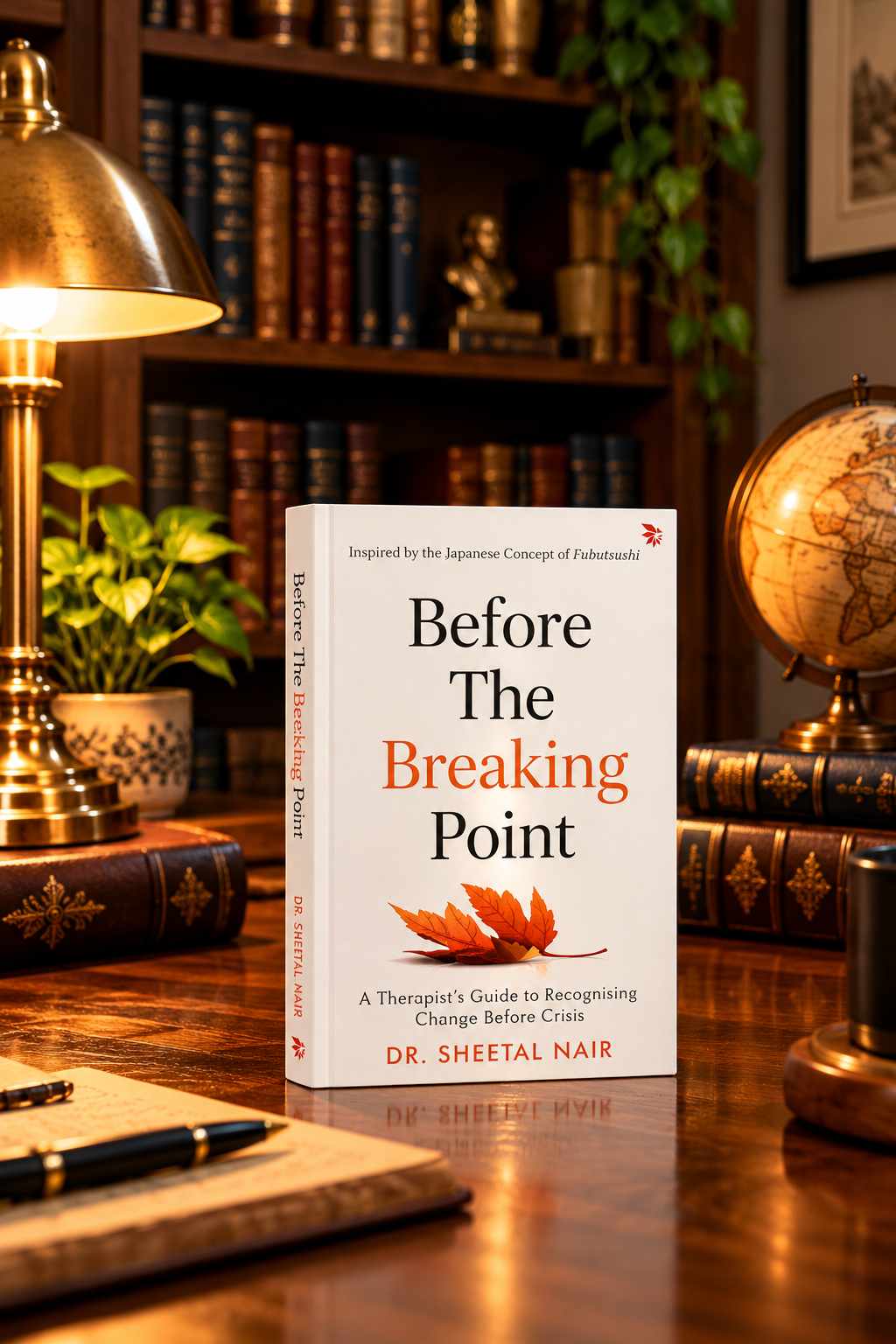
Before the Breaking Point: A Therapist’s Guide to Recognising Change Before Crisis
Author: Dr. Sheetal Nair
Life rarely changes overnight. Relationships can gradually lose their warmth, exhaustion can become part of everyday routine, and emotional distance can develop so slowly that it begins to feel normal. Often, the signs of a deeper problem are present long before a person recognises the need for change.
In Before the Breaking Point: A Therapist’s Guide to Recognising Change Before Crisis, Dr. Sheetal Nair explores these subtle emotional and psychological signals, encouraging readers to pay attention to what they may have been overlooking. Through therapeutic insights, relatable human experiences, and reflections on personal transformation, the book examines why people often wait until circumstances become overwhelming before acknowledging that something needs to change.
Rather than presenting change as a dramatic decision made in a moment of crisis, Nair invites readers to recognise the smaller moments of awareness that can influence the direction of their lives.
Recognising the Signs Before a Crisis
One of the central ideas explored in Before the Breaking Point is that emotional crises often develop through gradual changes rather than sudden events. Stress accumulates, conversations become less meaningful, personal needs go unexpressed, and familiar routines can begin to conceal deeper dissatisfaction.
Because these changes may happen incrementally, people can become accustomed to them without fully considering their consequences. What begins as occasional exhaustion may become a persistent pattern. What appears to be a temporary relationship difficulty may reflect a deeper issue that has remained unaddressed.
Drawing on his experience as a psychotherapist and executive coach, Dr. Nair encourages readers to become more attentive to these developments. Recognising a pattern does not automatically solve it, but it can create an opportunity to respond with greater understanding and intention.
This perspective is particularly relevant in a culture where people frequently prioritise responsibilities, productivity, and the expectations of others over their own emotional needs. The book invites readers to pause and consider whether the difficulties they have learned to tolerate are signals worth examining more closely.
The Emotional Patterns We Learn to Ignore
People develop different ways of responding to discomfort. Some avoid difficult conversations, others remain occupied with work, while many convince themselves that their feelings will eventually disappear. These responses can offer temporary relief, but they may also make it harder to recognise what is happening beneath the surface.
Before the Breaking Point explores the importance of understanding these patterns rather than simply reacting to their consequences. By examining emotional distance, unspoken disappointments, exhaustion, and disconnection, the book encourages readers to approach their experiences with greater honesty.
An important part of this process is learning to distinguish between a temporary difficult period and a recurring pattern that deserves attention. Feeling overwhelmed occasionally is a normal part of life, but persistent emotional strain may be an invitation to reconsider boundaries, expectations, relationships, or personal priorities.
The book’s emphasis on awareness encourages readers to ask meaningful questions about their experiences. What have they been avoiding? Which conversations remain unfinished? What needs have been repeatedly postponed? And what might change if they acknowledged these concerns earlier?
Such questions can become a starting point for reflection and more intentional decisions.
Fubutsushi: Understanding the Subtle Seasons of Life
An especially distinctive element of the book is its inspiration from the Japanese concept of Fubutsushi, associated with the subtle signs that evoke changing seasons and the feelings or memories connected to them.
The idea offers a useful way of thinking about emotional life. Just as seasonal changes may be noticed through small details before a new season fully arrives, personal transitions can also reveal themselves through subtle shifts in feelings, behaviour, and relationships.
A change in motivation, a growing sense of distance, or a persistent feeling that something no longer fits may be easy to dismiss when viewed in isolation. Considered together, however, these experiences may encourage a person to reflect on what is changing.
Through this perspective, Nair invites readers to become more attentive observers of their own lives. The goal is not to interpret every difficult feeling as a warning or to become anxious about ordinary changes. Instead, it is to develop the awareness to recognise when recurring experiences deserve care and attention.
This connection between emotional awareness and the natural rhythms of change gives the book a reflective dimension, encouraging readers to make space for observation before rushing towards conclusions.
Relationships, Burnout, and Personal Transitions
The themes explored in Before the Breaking Point are relevant to several areas of everyday life, including relationships, professional responsibilities, and personal well-being.
In relationships, unspoken expectations and unresolved disappointments can gradually affect trust and emotional closeness. When these concerns remain unaddressed, individuals may become accustomed to distance rather than recognising the need for an honest conversation.
In professional life, ambition and responsibility can sometimes make exhaustion appear like a necessary part of success. People may continue meeting expectations while overlooking the personal cost of doing so. Over time, this can make it difficult to distinguish healthy commitment from a pattern of persistent strain.
Personal transitions present similar challenges. Changing priorities, evolving identities, and uncertainty about the future can create discomfort even when a change is necessary or ultimately beneficial.
By bringing attention to these experiences, the book encourages readers to consider the relationship between their everyday patterns and their longer-term well-being. It reminds them that recognising a difficulty is not a sign of failure; it can be an important step towards understanding what needs attention.
Creating Space Between Awareness and Consequence
A central message of the book is the importance of reclaiming the space between recognising a problem and experiencing its full consequences.
When people become aware of a recurring pattern early, they may have more opportunities to reflect, seek support, communicate honestly, and consider different responses. Waiting until a situation becomes unbearable can make decisions feel more urgent and leave fewer perceived options.
However, awareness should not be confused with having immediate answers. Understanding a difficult emotional experience may take time, and meaningful change can require patience, support, and sustained effort.
Nair’s approach encourages readers to see self-examination as an ongoing process rather than a one-time solution. Recognising an uncomfortable truth is only the beginning; responding to it thoughtfully is what allows awareness to become meaningful action.
This message may resonate particularly with people who feel that something in their lives has changed but have struggled to explain what it is. The book creates an opportunity to examine those feelings without assuming that every uncertainty requires an immediate or dramatic decision.
About the Author: Dr. Sheetal Nair
Dr. Sheetal Nair is a psychotherapist, executive coach, entrepreneur, bestselling author, and four-time TEDx speaker whose work explores human behaviour, emotional well-being, leadership, and personal transformation.
With more than 16 years of professional experience, he has worked with individuals, corporate leaders, and organisations, helping them navigate emotional challenges, relationships, and significant life transitions. As the author of ten books, he combines psychological understanding, therapeutic experience, and storytelling to make complex human experiences more accessible.
Known as the Peace Enabler, Dr. Nair advocates emotional awareness, intentional living, and the importance of understanding oneself before circumstances force a change.
In Before the Breaking Point, he brings these interests together through an exploration of the subtle signs that can precede personal crises and the value of recognising them before they become overwhelming.
Who Should Read This Book?
Before the Breaking Point may appeal to readers who want to understand their emotional patterns and become more attentive to changes in their lives.
It may be particularly relevant to:
- Individuals experiencing emotional exhaustion or uncertainty about their personal direction.
- Professionals navigating workplace stress, demanding responsibilities, or questions about work-life balance.
- People seeking to understand recurring relationship difficulties and unspoken expectations.
- Readers interested in psychology, emotional awareness, and personal development.
- Anyone who senses that something in their life needs attention but has not yet found the clarity to address it.
The book may also provide useful reflection for readers who are not currently experiencing a crisis but want to become more aware of the patterns that influence their relationships, choices, and well-being.
Final Verdict
Before the Breaking Point: A Therapist’s Guide to Recognising Change Before Crisis offers a thoughtful exploration of the emotional signals people often overlook while navigating everyday life. Through themes of self-awareness, relationship patterns, exhaustion, and personal transitions, Dr. Sheetal Nair encourages readers to pay attention to changes before they become impossible to ignore.
The book’s connection to Fubutsushi reinforces its central message: meaningful changes can begin with subtle signs. Learning to notice those signs can create space for reflection, more considered choices, and a deeper understanding of personal needs.
Rather than promising a life without difficulties, the book encourages readers to approach those difficulties with greater awareness and responsibility. Its message is not that every challenge can be prevented, but that recognising patterns earlier may offer more opportunities to respond thoughtfully.
Ultimately, Before the Breaking Point invites readers to stop treating persistent emotional signals as background noise and begin asking what those experiences may be telling them.
Editorial Verdict: A reflective and timely read for anyone seeking greater emotional awareness and a deeper understanding of the changes that precede personal crises.
Recommended for: Readers interested in psychology, relationships, emotional well-being, workplace stress, and personal transformation.
Read the Book
Buy Before the Breaking Point on Amazon
Author Website: https://www.sheetalnair.com